




Super El Niño Threat 2026 | Are Karachiites Ready?
 Digital KarachiApril 25, 202631 Mins read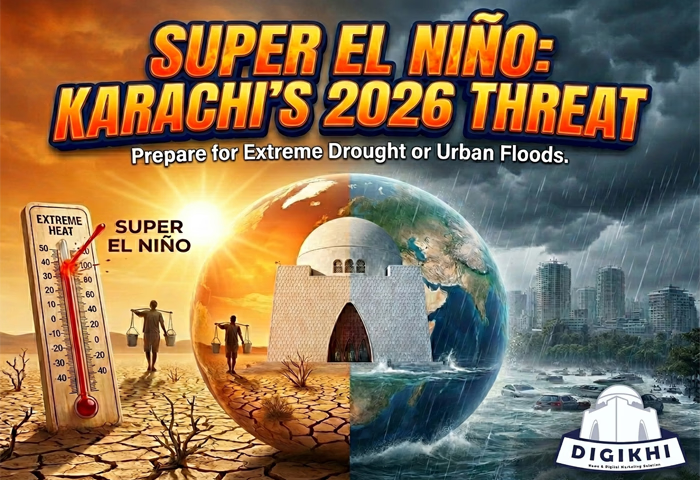
Super El Niño Threat 2026: 700 died in 2015. Something Bigger Is Building Now — DigiKhi Warns Karachi Before It Hits.
Key Takeaways
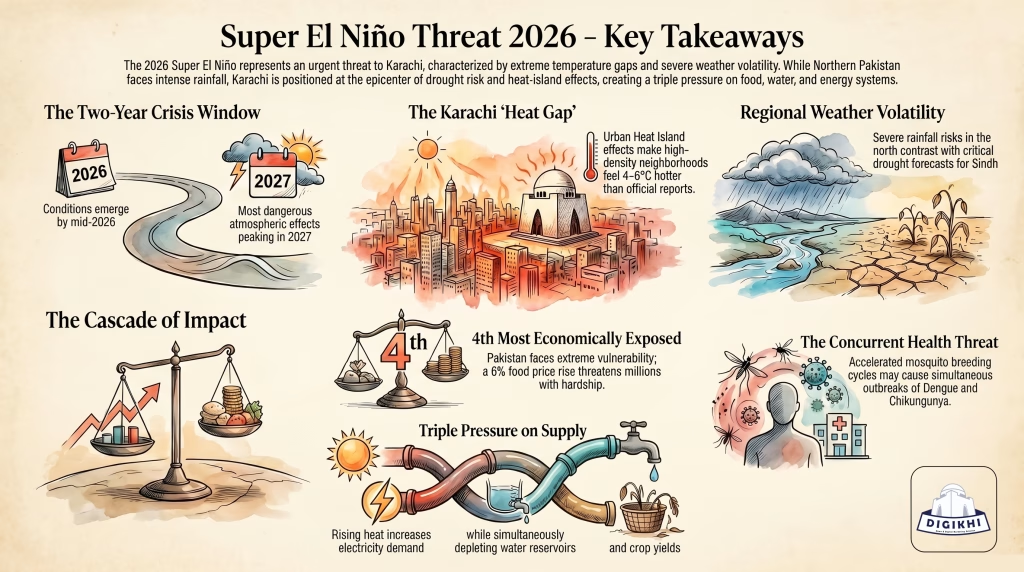
- Super El Niño Is Already Forming: The World Meteorological Organization confirmed on April 24, 2026, that El Niño conditions could emerge as early as May–July 2026. Pakistan’s PMD says it could intensify into a full “Super” event by August or September — making it a direct and urgent threat for every Karachiite.
- Karachi Sits in the Highest-Risk Zone: Unlike northern Pakistan, which may face intense rainfall, Sindh and Balochistan are forecast to receive critically below-average monsoon rainfall. Karachi — as Sindh’s largest city — sits at the very epicenter of this season’s drought risk.
- 2027 Could Be Even More Dangerous Than 2026: The atmosphere takes months to react to ocean warming. Climate scientists confirm that if El Niño forms in late 2026, its worst atmospheric effects will peak in 2027 — a delayed impact that no Pakistani government office has yet started planning for.
- Pakistan Ranks 4th Most Vulnerable Country Economically: Standard Chartered Bank’s global vulnerability index placed Pakistan fourth among the world’s most economically exposed countries to El Niño’s impact. With food items accounting for over 40% of low-income households’ spending, even a 6% rise in food prices could push millions into deeper financial hardship.
- Karachi Residents Feel 4–6°C Hotter Than Official Readings: The Urban Heat Island effect — caused by concrete, metal rooftops, and only 4.5% forest cover — means residents of Lyari, Orangi Town, Korangi, Baldia Town, and Surjani Town experience temperatures far above what PMD officially reports. Super El Niño will make this dangerous gap even wider.
- Karachi’s Hospitals Are Not Ready for Another Heatwave: Government hospitals lack dedicated heatstroke wards, sufficient IV fluid stockpiles, and adequate cooling equipment. The 2015 heatwave killed 700 people in three days, and the 2024 heatwave took 450 lives in four days — both events overwhelmed the city’s entire health system within hours.
- The Water Crisis Will Get Worse: Sindh already received 63% less winter rainfall than normal in 2024–25. Hub Dam entered 2026 dangerously depleted. A suppressed monsoon from Super El Niño will simultaneously threaten Hub Dam, the Indus River supply, and Karachi’s private water tanker network — all at once.
- Food Prices Will Rise Sharply Across Pakistan: Sindh produces 60% of Pakistan’s rice, 35% of its southern wheat, and 28% of its cotton. A monsoon failure will cause crop losses, triggering a chain reaction of inflation in food, clothing, and essential goods — spreading from Sindh’s fields to every Pakistani family’s monthly budget.
- Dengue and Chikungunya Outbreaks Are a Real Concurrent Threat: Super El Niño accelerates the breeding cycle of the Aedes mosquito — the same mosquito that spreads both dengue and chikungunya. Karachi experienced a chikungunya outbreak in 2016 that infected over 30,000 people and a surge in 2024, with 750 patients per day at major hospitals. Both diseases could hit simultaneously this season.
- Electricity, Water, and Food Supplies Face Triple Pressure: Energy inflation is already approaching 30% year-on-year. Rising temperatures will increase electricity demand while hydropower output drops. Water supplies will tighten as reservoirs fail to recharge. Food prices will spike as Sindh’s crops fail — all three supply systems are under simultaneous stress.
- The Elderly, Children, and Outdoor Workers Face the Highest Risk: People over 60, children under five, pregnant women, outdoor laborers, and those with heart or kidney conditions are most vulnerable. People observing Roza during peak heat face an increased risk of dehydration. Low-income residents in high-density neighborhoods without access to cooling remain the most exposed group in the entire city.
- Every Karachi Family Can Prepare Right Now — Before It’s Too Late: Storing water, subscribing to PMD alerts, locating the nearest cooling center, building a heatstroke first-aid kit, eliminating standing water weekly, and monitoring NDMA advisories are all actions every family can take today. The window for calm, affordable preparation is open right now — but it will not stay open for long.
By the grace of Allah, Karachi is a tough city — and its people are even tougher. Accordingly, this city of 20 million has faced disasters that would destroy smaller cities completely. Since 1990, it has experienced urban flooding every monsoon season. In August 2020, it survived the worst flooding in nearly 100 years — 231 millimeters of rain in just 12 hours. Therefore, in June 2015, a heatwave killed over 700 people in three days. Moreover, in 2024, another heatwave took 450 lives in four days. But something new is coming.
Unusual Activity in the Pacific Ocean
Additionally, right now, something unusual is happening in the Pacific Ocean — thousands of kilometers away. Most Karachi residents have no idea it will affect them directly. A Super El Niño is quietly building beneath the ocean’s surface. The World Meteorological Organization confirmed on April 24, 2026, that El Niño conditions could begin as early as May–July. Pakistan’s PMD says it could become a full “Super” event by August or September. Although this is not just weather news, it is a serious, personal warning for every Karachiite.
What is Super El Niño? The Science Behind the Pacific Ocean Phenomenon That is Threatening Karachi
The Pacific Ocean as Karachi’s Weather Controller
Think of the Pacific Ocean as a giant karahi — a huge cooking pot sitting on a stove. After all, normally, strong winds push warm water westward toward Asia. It keeps the world’s weather balanced and steady. But during El Niño, those winds get weak. The warm water then slides back toward the middle of the ocean, like water shifting in a tilted bowl. That one change affects weather systems worldwide.
Why Every Karachiite Must Understand This Now?
Above all, Pakistan sits directly in the path of those changes. Karachi, as Pakistan’s biggest coastal city, feels the effects first and hardest. Altogether, understanding how this works is not just for scientists. Every Karachi family needs this useful information right now — before the season changes and preparation time runs out completely.
El Niño vs. Super El Niño — What Makes It “Super”?
The Fever That Quadruples Overnight
Think of a regular El Niño like a mild fever — annoying, but manageable with care. Another way to see it — imagine that the fever gets four times worse overnight. That’s a Super El Niño. A regular El Niño happens when Pacific Ocean temperatures rise just 0.5°C above normal. A Super El Niño pushes past the 2°C mark — four times stronger. Only five have happened since 1950. The last one hit from 2015 to 2016 — and Karachi paid a very heavy price.
What the Numbers Are Already Telling Us?
Basically, NOAA currently puts the chance of El Niño forming by mid-2026 at 61%. Carbon Brief studied 637 climate model runs and found a median warming forecast of 2.2°C by September. As a matter of fact, that puts 2026 firmly in Super El Niño territory. Mainly, scientists are no longer guessing. The signs are clear, measurable, and very worrying for cities like Karachi, which sit right on Pakistan’s coast.
How the Pacific Ocean Controls Karachi’s Weather?
The Invisible Pipeline That Feeds Karachi’s Rain
How can an ocean thousands of kilometers away change Karachi’s weather? Because it controls everything, actually. Karachi’s rainfall, monsoon timing, and humidity are all directly linked to Pacific Ocean temperatures. When the ocean gets too warm, it blocks the winds that carry the South Asian monsoon northward each year. Those winds bring Karachi its only real source of rainfall every summer season.
When the Pipeline Breaks — What Happens Next?
As a result, when those winds weaken, the monsoon weakens too — or changes direction entirely. Besides, our city is already dealing with heat and water shortages. A weaker monsoon makes both problems much worse. The result is longer dry periods and more dangerous heatwaves. The monsoon might arrive late or bring very little rain at all. For a city already under pressure, that’s not just uncomfortable — it’s a real crisis.
What Will Super El Niño Do to Pakistan’s Monsoon Season in 2026?
A Direct Warning from Pakistan’s Own Meteorologists
Pakistan’s own weather experts have been very clear about this. But PMD spokesperson Anjum Nazir Zaigham said it directly:
El Niño suppresses the summer monsoon in the subcontinent.
That’s a strong warning from Pakistan’s top weather authority. NDMA has warned that the 2026 monsoon may be 22–26% stronger in northern Pakistan. At the same time, Sindh and Balochistan expect to receive much less rain than normal. That’s a dangerous imbalance.
The Split-Personality Monsoon Nobody Is Ready For
Eventually, floods hit the north while drought strikes the south — that’s the cruel reality of a Super El Niño. Further, this confusing weather pattern makes preparation very difficult for the whole country. Karachi sits in the zone forecast to receive below-average rainfall this season. The hot period before the monsoon may also last several extra weeks. By the time officials issue public warnings, the damage will already be hitting neighborhoods across the city.
1997, 2015, Now: How Every Past Super El Niño Hit Pakistan Hard — And What 2026–2027 Will Repeat?
A Truth Pakistan’s Climate Discussions Keep Avoiding
Here is something Pakistan’s climate discussions often avoid. Furthermore, we have faced Super El Niño before — twice that people alive today can remember. Both times, it badly damaged our weather, our economy, and our health system. Both times, Pakistan entered the disaster completely unprepared. The damage lasted for years after the event, hurting farmers, hospitals, and families across the country. Generally, the lessons from 1997 and 2015 carry clear warnings for 2026–2027. Are we finally going to take them seriously?
History as a Roadmap — Not Just a Memory
Hence, history keeps repeating itself in Pakistan — always worse than before. However, the facts from those two events are not old stories. They serve as a useful guide showing exactly what happens when millions of people face a climate event unprepared. Their own scientists warned them months earlier. For this purpose, every Pakistani must understand what these past events mean for today.
The 1997–98 Super El Niño — Pakistan’s Forgotten Climate Disaster
The Disaster Nobody Talks About Anymore
Ask most Pakistanis what happened in 1997 and they’ll talk about cricket or politics — not the weather. At this point, that forgetfulness is exactly why we keep making the same mistakes. The 1997–98 Super El Niño ranked among the most powerful ever recorded worldwide. Monsoon patterns fell apart badly across South Asia. By all means, Pakistan received irregular rainfall, suffered ruined crops, and faced early, dangerous heat across Sindh’s farming areas. Cotton and rice production dropped sharply across the Province.
The Economic Wounds That Lasted Years
Henceforth, farmers lost water and livestock at the same time. Food prices and living costs stayed high for years afterward. Nevertheless, today, that disaster barely gets a mention in Pakistan’s climate discussions. That silence is exactly why we keep repeating the same dangerous pattern of unpreparedness. Remembering 1997 is not about looking back. It is about not repeating the same painful mistakes in 2026.
The 2015 Karachi Heatwave — 700 Deaths in Three Days
When the City Turned into an Open Furnace?
June 2015 is a date every Karachiite should remember — not as old news, but as a warning for today. Nonetheless, a severe heatwave, worsened by the 2015–16 Super El Niño, hit the city during Ramadan. Millions were already fasting through brutal afternoon heat.
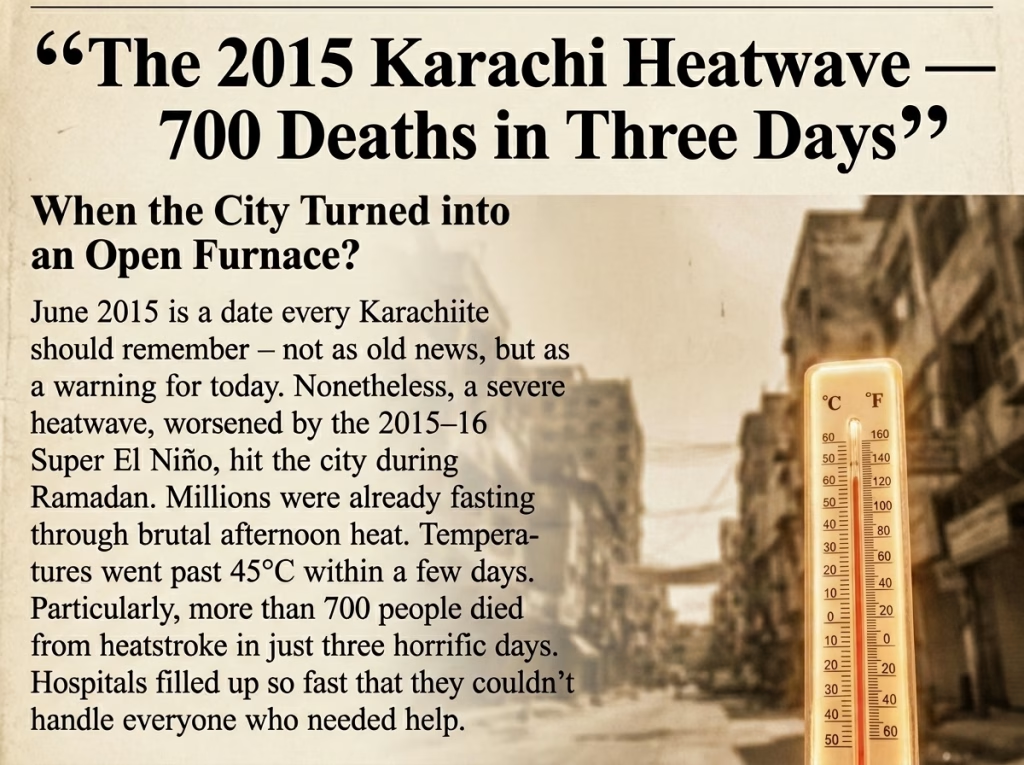
Temperatures went past 45°C within a few days. Particularly, more than 700 people died from heatstroke in just three horrific days. Hospitals filled up so fast that they couldn’t handle everyone who needed help.
The Power Cuts That Turned a Crisis into a Catastrophe
Presently, the Edhi Foundation carries hundreds of bodies to the city morgue. Power cuts lasting 12–18 hours made fans and water pumps useless. In brief, most of those who died were older adults, outdoor workers, and poor residents. They had no air conditioning. They had no way to escape the heat. The city survived — but 700 families lost someone forever. That number should never be forgotten.
Why Super El Niño Will Be Worse in 2027 Than in 2026? The Delayed Effect: Pakistani Media is Not Explaining
The Pressure Cooker Effect Nobody is Explaining
In conclusion, here is something almost no Pakistani news outlet is talking about — and it may be the most useful part of this article. The atmosphere doesn’t react to ocean warming right away. Significantly, the heat stored in the Pacific takes months to affect global weather fully. Think of it like a pressure cooker — the real explosion comes after steam builds up for a while. Climate scientist Tido Semmler from Ireland’s National Meteorological Service confirmed this directly.
Why 2027 Could Be Pakistan’s Most Dangerous Year?
Simultaneously, if El Niño forms in late 2026, its worst effects will hit in 2027 — not this year. In essence, Carbon Brief’s review of 637 climate models shows El Niño usually peaks between November and January. That means 2027 could be Pakistan’s most dangerous year ever. Yet no government office anywhere in Pakistan has begun planning specifically for 2027. That’s a serious problem that needs urgent attention from officials and citizens alike.
Pakistan is the 4th Most Vulnerable Country to Super El Niño: Here is What That Means for Your Job, Salary, and Savings
Fourth Most Vulnerable — What That Really Means?
In general, Pakistan ranked fourth in Standard Chartered Bank’s list of countries most at risk from El Niño’s economic damage. Think about that — fourth out of every country on Earth. Subsequently, this is not a random number. Pakistan’s economy depends heavily on rain-fed farming, imported fuel, and a budget with almost no safety net. When El Niño damages even one of these areas, regular people feel it fast and hard.
When Three Economic Pillars Fall at Once?
In other words, they feel it in higher prices at the market, fewer work hours on job sites, and less money at the end of each month. In particular, what happens when all three take a hit at once? That’s exactly the situation Pakistan is heading toward — and most families are not financially prepared for any of it.
Why Pakistan Ranks So High on the Vulnerability Index?
The Numbers Behind the Ranking
In short, farming makes up over 23% of Pakistan’s total economy and employs 37% of all workers. These aren’t just numbers—they represent real families whose income depends entirely on rain arriving on time. Thereupon, food takes up more than 40% of what low-income Pakistani families spend each month. So, when food prices rise, it hurts deeply and immediately. The government also carries very little money to help people through a crisis using subsidies.
How El Niño Turns Inflation into a Crisis?
In summary, a European Central Bank study found that just one degree of El Niño-related warming raises global food prices by over 6% within a year. Pakistan already had an overall inflation of 7.3% entering 2026. In the light of this, if crop failures add to that pressure, things could get much worse very quickly. Regular Karachiites will feel it first — at the vegetable stall, the grocery store, and the milk shop every single morning.
How Will Super El Niño Affect Electricity, Water, and Food Supplies Across Pakistan?
Three Legs on One Stool — All Kicked at Once
All in all, imagine Pakistan’s three most basic supplies — electricity, water, and food — as three legs holding up a table. El Niño knocks all three legs at the same time. Another key point — energy costs already climbed nearly 30% year-on-year entering 2026, before the hot summer even begins. Hotter weather will push electricity use much higher across all cities. At the same time, less glacier water will reduce hydropower output noticeably.
Who Will Feel the Hardest Hit?
Chiefly, food prices will jump if Sindh’s crops fail this season. Water supplies in Karachi will get even tighter than they already are. Compared with the result — higher bills, expensive food, and unreliable water — it will hurt middle- and lower-income Karachi families the most. These families already carry almost nothing left over each month to deal with any new financial pressure.
Why Karachi Feels 5°C Hotter Than the PMD Thermometer Says? The Urban Heat Island Crisis Under Super El Niño
The Hidden Temperature Gap Nobody Talks About
Concurrently, here is something every Karachiite feels but may not yet fully understand. PMD measures temperature at official weather stations around the city. Consequently, those stations sit nowhere near Orangi Town, Lyari, or Korangi. Those are densely packed residential areas full of concrete, metal roofs, and dark asphalt roads, with almost no trees anywhere. People living there regularly feel 4–6°C hotter than what PMD reports on TV or social media every single day.
Super El Niño Will Make That Gap Even Wider
Conversely, this difference is real — scientists have confirmed it using satellite imagery and detailed research. Conversely, Super El Niño won’t just push up the official temperature reading. It will make this hidden gap between the official number and what residents actually feel even larger and more dangerous. This problem affects every packed neighborhood in the city.
What Is the Urban Heat Island Effect in Karachi?
A City Wrapped in a Black Blanket
Correspondingly, picture your whole city wrapped in a black blanket and placed under the midday sun. That’s basically what Karachi has become after years of unplanned building and growth. Despite this, the Urban Heat Island effect occurs when buildings, roads, factories, and metal roofs absorb and retain much more heat than natural ground would. These artificial surfaces cover every neighborhood in Karachi. The city’s tree cover holds only 4.5% of its total land area.
The Sea Breeze That No Longer Reaches the People
During normal times, the recommended amount is 25% — nearly six times Karachi’s current level. Earlier, the cool sea breeze that used to help cool the city got blocked by tall buildings along the waterfront. Parks and green spaces are almost nowhere to be found. During a Super El Niño, this extra trapped heat could become life-threatening for the most at-risk residents without access to cooling.
Which Neighborhoods Face the Highest Risk?
The Five Neighborhoods in the Most Danger
Emphatically, Lyari, Orangi Town, Korangi, Baldia Town, and Surjani Town have the highest heat island risk in Karachi. People in these neighborhoods deserve to know that clearly. Equally, these areas hold crowded low-income housing, almost no parks, poor drainage systems, and very little shade anywhere on the streets. Most residents are daily workers — builders, street sellers, and rickshaw drivers — who must keep working no matter how hot it gets.
No Cooling, No Water, No Way Out
Especially, they are also least likely to own air conditioners or have stable electricity. Clean drinking water is also hard to get regularly. Eventually, under Super El Niño conditions, these areas will not just feel hot; they will also experience severe drought. They will become dangerous, life-threatening places to live. Residents will find almost nowhere to go for relief — and very little government support when the heat peaks.
Super El Niño and Karachi’s Heatstroke Crisis: Why Pakistan’s Hospitals Cannot Cope Again?
Heatstroke Is Not Discomfort — It is a Killer
Evidently, heatstroke is not just feeling too warm. It is a deadly medical emergency with a specific and terrifying definition. Explicitly, the body’s core temperature crosses 41°C. Organs start shutting down fast and without warning. Without treatment right away, a person can die quickly. Karachi’s government hospitals don’t carry enough dedicated heatstroke beds or cooling equipment to handle large numbers of patients at once.
The Crisis Will Arrive Before the Preparation Does
Finally, they also don’t stock enough IV fluids for a major heat emergency. Firstly, Super El Niño won’t wait for hospitals to upgrade their facilities. The crisis will arrive before anyone finishes preparing. That’s not a pessimistic view. It’s exactly what happened in every previous heatwave this city survived — and the pattern keeps repeating itself without real change.
Who is Most at Risk from Super El Niño in Karachi and Pakistan?
The Groups Standing Closest to the Danger
Following this, who is standing closest to this danger? Older adults carry the highest risk — their bodies can no longer handle extreme heat well. Forthwith, children under five come next, followed by pregnant women dealing with extra body heat. Outdoor workers — the people who keep Karachi’s economy running every day — face growing risk hour by hour. People with existing heart or kidney problems face danger even on days that others find merely uncomfortable.
The Urban Poor — Most Exposed, Least Protected
In the final analysis, during Karachi’s 2024 heatwave, Civil Hospital took in 267 heatstroke patients in just four days — 12 of them died. Most were elderly or daily workers with no cooling at home. In truth, people fasting during Roza in peak heat face an added risk of dehydration on top of everything else. The urban poor — without fans or reliable power — remain the most at-risk group in the entire city right now.
What Happened in 2015 and 2024 — And Why 2026 Could Be Worse
Two Disasters That Followed the Same Deadly Pattern
In view of this, we already know the 2015 numbers — 700 lives in three days. Then 2024 came and took over 450 more in just four days. Most importantly, hospital emergency rooms buckled under the patient surge within hours of both crises starting. K-Electric’s power cuts — running 12–18 hours every day — shut down fans and water pumps all across the city at the same time. Of course, coordinating power supply management during declared heat emergencies could be something authorities may want to consider more seriously going forward.
The Legal Gap That Keeps Costing Lives
As a result, in 2026, Super El Niño will bring even higher temperatures and longer heatwaves. On the contrary, it may be worth exploring a policy framework that encourages K-Electric to consider reducing power cuts during officially declared heat emergencies in Karachi. The national power grid will also face more stress as cooling demand rises everywhere. Authorities may find it helpful to review existing regulations and consider stronger protective measures for citizens during extreme heat events.
Karachi’s Water Crisis Will Get Worse: How Super El Niño Threatens KWSB, Dams, and Drinking Water in 2026
Three Water Sources — All Under Threat at Once
On the other hand, even before Super El Niño became a concern, Karachi’s water system was already in serious trouble. The city draws its water from three main sources: Hub Dam, the Indus River through KWSB pipes, and private water tankers. On the positive side, all three depend, directly or indirectly, on monsoon rains refilling reservoirs and rivers each year. A weaker monsoon from Super El Niño puts all three sources at risk at the same time.
20 Million People and No Backup Plan
On the whole, this will happen exactly when 20 million people need water the most — during the hottest part of summer. Only if a proper backup supply system existed could anyone adequately fill this gap. Owing to this, the equation is simple and harsh: less monsoon rain equals less water for everyone in this city, no matter where they live.
Where in Pakistan Will Super El Niño Cause the Most Damage?
Sindh and Balochistan: The Hardest Hit Provinces
Before this, if Super El Niño had to pick its biggest targets on a Pakistan map, it would pick Sindh and Balochistan. So far, both provinces face the highest risk of below-average rainfall under any Super El Niño model currently running. NDMA’s expert Dr. Tayyab has confirmed that Sindh and Balochistan will most likely see dangerously low rainfall overall. Karachi — Sindh’s largest city and its biggest water user — sits right at the center of that risk.
The Northern Threat: Glacial Floods Brewing Simultaneously
Summing up, in northern Pakistan, melting glaciers from rising temperatures create another danger at the same time. To clarify, glacial lake outburst floods in Gilgit-Baltistan become much more likely.
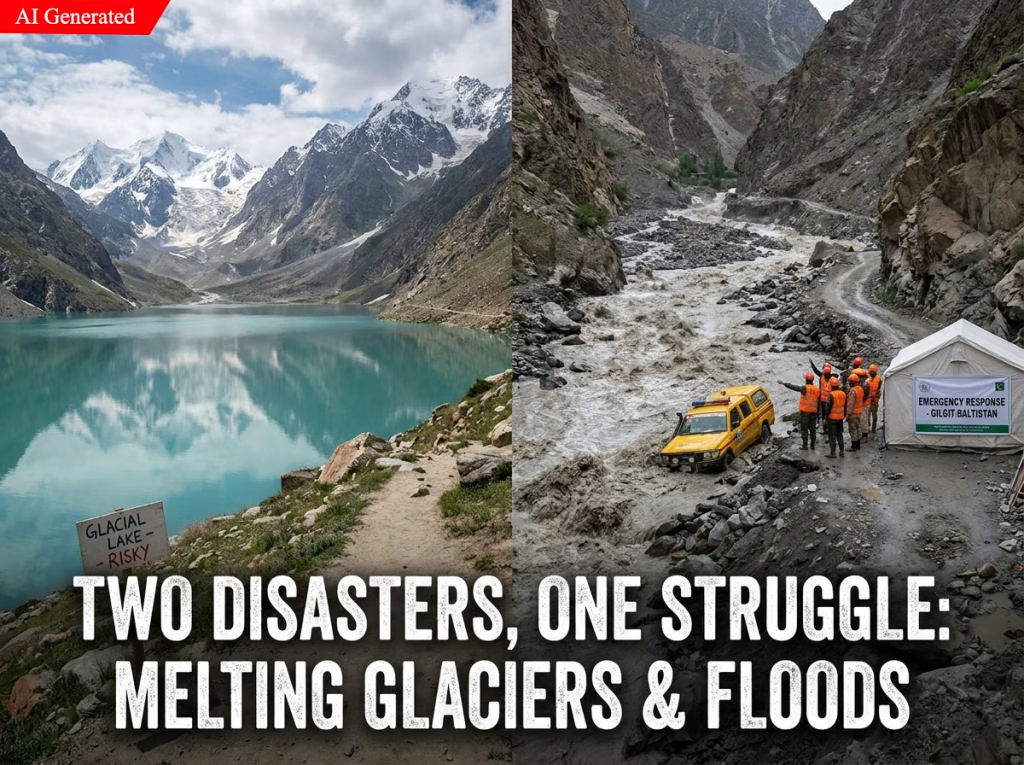
Pakistan will deal with two completely different disasters at once — using the same limited emergency teams and the same underfunded disaster management system that already struggles under normal conditions.
Hub Dam, Indus River, and KWSB — The Triple Threat
A Reservoir Starting from a Dangerous Deficit
To conclude, Hub Dam’s water storage depends entirely on rainfall in the Hub River area west of Karachi. Here’s the problem: Sindh already received 63% less winter rain than normal in 2024–25. To demonstrate, reservoirs entered 2026 at dangerously low levels. We are already starting with less water than we need before the monsoon even begins. If the 2026 monsoon also fails to deliver enough rain, Hub Dam could drop to critically low levels before summer 2027 even arrives.
When High Demand Meets Dangerously Low Supply?
To reiterate, KWSB already struggles to meet Karachi’s daily water needs under normal conditions. A 20–30% reduction during peak summer heat would be a disaster for 20 million people. To enumerate, that’s exactly when water demand hits its highest point. When high demand meets dangerously low supply, the result is a water emergency. This city carries no real plan to manage adequately.
How Super El Niño Will Push Pakistan’s Food Prices Even Higher? Wheat, Rice, Cotton, and Your Grocery Bill in 2026
The Wince at the Grocery Store Is Only Getting Worse
To explain, you’ve already felt it — that uncomfortable moment at the grocery store when prices seem impossible. Pakistan’s food bills have been painful for two full years of high food inflation. To illustrate, every family’s budget is already stretched to the limit. Now Super El Niño is coming — and it won’t make things easier. It will hit the farming areas that feed the whole country right when they are weakest and least able to handle more problems.
The Families Who Will Suffer the Most
To list the damage clearly, it will begin in Sindh’s fields and spread to markets across Karachi to Peshawar within weeks of any major crop failure. To point out, the families who will suffer the most are exactly those who can least afford food — households already cutting back on meals to survive each month.
Sindh’s Role in Pakistan’s Food Supply
60% of Pakistan’s Rice Comes from One Province
To put it another way, Sindh is not just a farming province — it is the foundation of Pakistan’s entire food supply. The Province grows 60% of Pakistan’s rice, 35% of its southern wheat, and 28% of its cotton. To put it differently, these are not small contributions that anyone can easily replace elsewhere. They are the necessities that determine what people across Pakistan eat, wear, and sell to the world. When Sindh’s monsoon fails, rice fields across thousands of acres dry up very quickly.
From the Fields of Sindh to Every Family’s Front Door
To repeat, wheat production drops across key farming districts. Cotton — already down over 30% last year — falls even further without enough monsoon rain. To rephrase it, textile factories lose their main raw material. Within months of a serious crop failure, prices for food, clothing, and household goods rise nationwide. That ripple effect doesn’t stay in Sindh — it reaches every family’s budget across Pakistan.
Why is Super El Niño More Dangerous Than a Regular El Niño for South Asia?
Turning Down the Tap vs. Smashing the Pipe
To say nothing of the damage already done — a regular El Niño is like turning down a water tap slightly. Less water comes out, but everything still works. To sum up the difference simply, a Super El Niño is like breaking the whole pipe with a hammer. When ocean temperatures rise by more than 2°C above normal, they release stored heat at levels that completely disrupt the Indian Ocean weather system. That system drives South Asian rainfall — including every drop that falls on Karachi.
Chaos That Farmers Cannot Plan Around
To summarize, when that system breaks down, rainfall doesn’t just decrease evenly and predictably. It becomes chaotic and impossible to plan around. Some areas receive a month’s rain in one or two days. Others receive almost nothing for weeks. NDMA’s experts described this scenario exactly. For Sindh’s farmers, that kind of unpredictability is even worse than a straight drought alone.
Super El Niño and Dengue in Karachi 2026: Why This Monsoon Season Could Trigger a Disease Catastrophe?
The Third Threat Nobody Is Watching Closely Enough
Accordingly, heatwaves and floods get a lot of attention because we can see and feel them clearly. But there is a third danger — invisible, quiet, and breeding right now in every blocked drain and old tire across Karachi. Additionally, the Aedes aegypti mosquito doesn’t read weather reports or care about government warnings. It only needs three things: warm air, standing water, and time. Super El Niño is about to deliver all three in large amounts this season.
A Pattern Documented in Every Major El Niño on Record
Although Karachi’s hospitals already struggle to handle regular dengue outbreaks without the added pressure, a Super El Niño-driven outbreak could completely overwhelm the entire health system. After all, this is not a dramatic exaggeration. Scientists have documented this pattern in every major El Niño event in recorded global history. Every Karachiite must take this third invisible threat just as seriously as the heatwave and the flood.
How El Niño Feeds Mosquito Breeding Cycles?
Warmer Weather Means Faster, Deadlier Mosquito Cycles
Above all, here is the biology — and every Karachiite should know it. Warmer temperatures speed up the Aedes mosquito’s life cycle from egg to adult noticeably. Altogether, the whole process happens faster under heat, producing far more mosquitoes than in a normal season. Even the tiniest pool of still water becomes a working breeding ground under these warm conditions. Old tires, flower pots, blocked roof drains — Karachi’s streets and rooftops carry these on every single block.
Pakistan’s 2022 Dengue Crisis as a Preview of What’s Coming
Multiple scientific studies have confirmed that stronger El Niño events increase the risk of dengue outbreaks worldwide. The 2022 post-flood dengue crisis in Pakistan overwhelmed hospitals at every level nationwide. As a matter of fact, that disaster is the most recent and local example of how bad climate-linked disease outbreaks can get. The mosquito won’t give a warning — it will just arrive and change everything very quickly.
Chikungunya: Karachi’s Other Mosquito Threat Under Super El Niño
As a result, Super El Niño doesn’t just fuel dengue — it also triggers chikungunya outbreaks. Besides, Karachi’s first major chikungunya outbreak in November 2016 infected over 30,000 people. In 2024, hospitals reported up to 750 chikungunya patients per day. Both diseases are spread through the same Aedes mosquito. Warmer temperatures from the Super El Niño are accelerating that mosquito’s breeding cycle — making simultaneous dengue and chikungunya outbreaks very likely in Karachi this season.
Will Super El Niño Cause Floods or Drought in Karachi and Sindh in 2026?
The Honest Answer Nobody Wants to Hear
But everyone wants a simple answer to this question — and the honest answer isn’t simple. Both floods and drought are likely, just at different times and in different places during the same season. At the same time, NDMA has described a scenario of extreme variation that no one can neatly fit into a single category. Some areas will get an entire month’s worth of rain in just one or two days. Others will stay dry for weeks with no meaningful rainfall at all.
Standing Water in a Dry Year — The Mosquito’s Perfect Storm
Eventually, for Karachi, the most likely outcome is less total monsoon rain overall — but with short, intense bursts that flood streets quickly. Further, long, hot, and dry stretches will then follow between those rain events. Even in a mostly dry year, short heavy rains leave standing water in blocked drains for days, which is all mosquitoes need to breed in very large numbers.
Super El Niño 2026 Karachi Survival Guide: 12 Steps Every Family Must Take Before June
Why Waiting for an Official Warning is Already Too Late?
Knowing about a danger is useful — but taking action is what actually keeps families safe. Preparation is what separates a hard summer from a deadly one. Generally, every family in Karachi — no matter what neighborhood, income level, or type of home — can take simple, affordable steps right now. Hence, these steps will genuinely lower the risk for every family member when the worst heat and water shortages hit. Do not wait for an official warning to begin.
The Window for Calm Preparation Is Open Right Now
By the time public warnings go out, store shelves will be half-empty, water tankers will cost twice as much, and panic will already be spreading everywhere. However, the chance to prepare calmly and affordably is open right now — but that window will close. Hence, every day of delay means one less day of useful preparation. Start today — not tomorrow, not next week.
Steps 1–6: Immediate Actions for Every Household
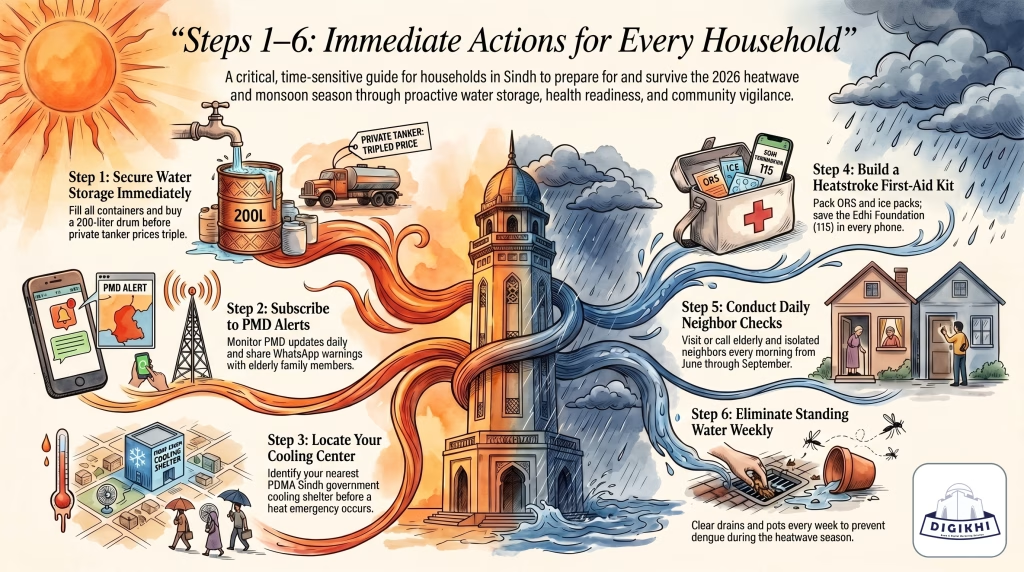
Step 1 — Store water now, not next week. For this purpose, fill every container you have today — buckets, drums, and bottles. Buy at least one 200-liter drum before June. At this point, during water crises, private tanker prices triple within days. Supply completely disappears within hours of any emergency announcement.
Step 2 — Subscribe to PMD alerts immediately. By all means, the Pakistan Meteorological Department sends heatwave warnings through its website and WhatsApp channels. Check PMD updates every day starting in May. Henceforth, share these alerts with elderly family members who may not have phones or internet access at home.
Step 3 — Locate your nearest cooling center today. Nevertheless, PDMA Sindh and local district offices set up government buildings as public cooling shelters during heat emergencies. Find your nearest one before you urgently need it. Nonetheless, knowing the location in advance could save someone’s life during a heat wave.
Step 4 — Build a heatstroke first-aid kit this week. Particularly, buy oral rehydration salts, a thermometer, ice packs, and cooling towels right now. Write down emergency numbers, including Edhi Foundation at 115. Presently, save your nearest government hospital’s emergency number in every family member’s phone today — not tomorrow.
Step 5 — Check on elderly and isolated neighbors every single day. In brief, being alone during a heatwave can kill just as surely as the heat itself. Assign one family member to call or visit elderly relatives and neighbors every morning. In conclusion, keep doing this consistently from June through September without skipping any days.
Step 6 — Eliminate all standing water around your home weekly. Significantly, check flower pots, old tires, rooftop tanks, and roadside drains every week. The dengue and the heatwave seasons fully overlap in 2026. Simultaneously, both threats need active attention throughout the whole dangerous season ahead.
Steps 7–12: Community and Health Preparedness
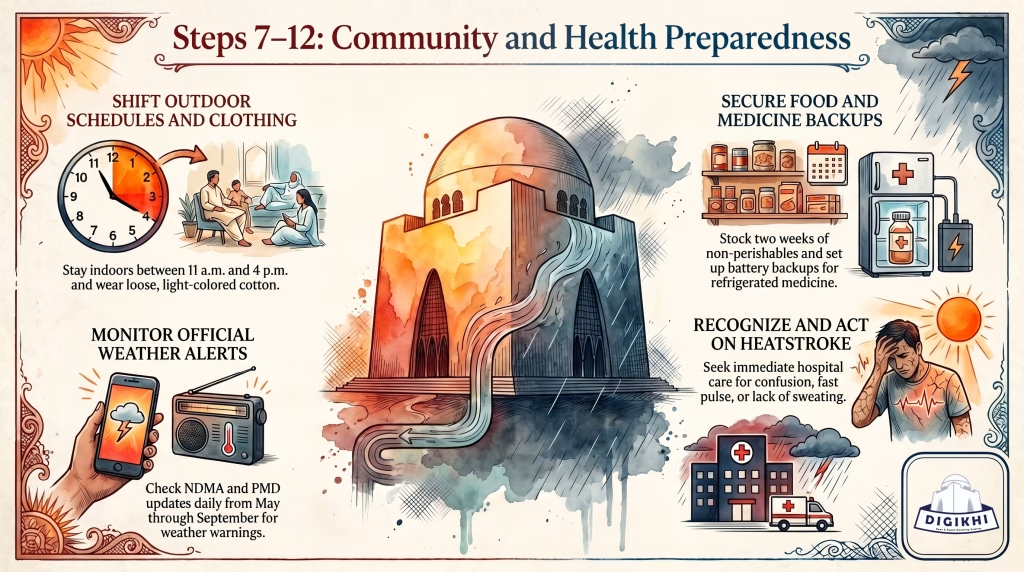
Step 7 — Change your outdoor schedule before June. In essence, stay indoors between 11 a.m. and 4 p.m. during heat advisories. If you work outside, ask your employer to adjust work hours right now. In general, do this before the dangerous heat peaks and before it harms your health.
Step 8 — Wear the right clothes for extreme heat every day. Subsequently, loose, light-colored, breathable cotton clothing absorbs much less heat than darker, tighter fabrics. Make sure children wear appropriate clothing to school each morning. In other words, help elderly family members dress properly for the heat every day without exception.
Step 9 — Stock two weeks of non-perishable food right now. In particular, rice, lentils, canned food, and dry goods bought today protect your family from supply problems. In short, when a crisis hits, stores get crowded, shelves empty, and prices rise well above current, already-painful levels.
Step 10 — Protect refrigerated medicines before summer. Thereupon, if a family member needs refrigerated medication, set up a UPS or battery backup for the fridge now — before heavy load-shedding begins in June. In summary, K-Electric cuts are almost certain during peak summer heat. They can ruin insulin and other important medicines within hours.
Step 11 — Learn the signs of heatstroke today. In light of this, body temperature above 40°C is a serious emergency. Sudden confusion or disorientation is a major warning sign. All in all, not sweating despite intense heat is another dangerous signal. A fast pulse with any of these signs means heatstroke. Get to the nearest hospital right away — don’t wait to see if it gets better.
Step 12 — Follow NDMA and PMD every single day through summer. Another key point — NDMA’s National Emergency Operations Center gives multi-day weather warnings for different parts of Pakistan. Save ndma.gov.pk on every phone and computer in your home. Chiefly, follow @PMD_Official on all social media. Read their updates every day from May through September 2026 — treat it as important daily information.
FAQs
Who is most at risk from Super El Niño in Karachi and Pakistan?
Compared with younger people, older adults face the greatest personal danger — their bodies cannot withstand extreme heat well. Children under five rank as the next most at-risk group, followed by pregnant women. Concurrently, outdoor workers and low-income residents without air conditioning face a serious daily risk throughout the summer. People fasting during Roza in peak heat face an added risk of dehydration on top of everything else. Consequently, people in Orangi, Lyari, and Korangi face the highest geographic risk in the city. Real temperatures there already run 4–6°C higher than official PMD readings — making these neighborhoods far more dangerous than forecasts suggest.
What will Super El Niño do to Pakistan’s monsoon season in 2026?
Contrarily, PMD has said it clearly — El Niño weakens the summer monsoon across South Asia. Sindh and Balochistan are expected to receive less rain than normal throughout the monsoon season. Conversely, some areas may still receive short, heavy bursts of rain despite the overall shortage. The monsoon may also arrive later than its usual calendar date. Correspondingly, this makes Karachi’s already brutal pre-monsoon heat season even longer than normal. That extra-long hot period will be hotter, longer, and harder than anything people in this city have experienced recently.
Where in Pakistan will Super El Niño cause the most damage?
Despite the risks spreading nationwide, Sindh and Balochistan will face the worst combined impact across several disaster types at once. Drought, failed crops, water shortages, and prolonged heatwaves will affect both provinces in the same season. During this period, Karachi, as Sindh’s biggest city, will carry the heaviest health and infrastructure burden. Northern Pakistan will also face faster glacier melt, increasing the risk of glacial lake outburst floods. Earlier warnings from NDMA already pointed to this dual-disaster scenario. Two major crises will compete for the same limited national emergency resources.
Why is Super El Niño more dangerous than a regular El Niño for South Asia?
Emphatically, a regular El Niño just makes the monsoon slightly weaker — difficult, but manageable with good preparation. A Super El Niño completely breaks the whole system. Equally, when ocean temperatures rise by more than 2°C above normal, they release stored heat, which disrupts the entire Indian Ocean weather pattern. The monsoon doesn’t just slow down — it falls apart into unpredictable pieces. For example, neighboring regions can experience completely opposite weather in the same season. That unpredictability makes planning for farming, disaster response, and water management nearly impossible at the scale South Asia needs.
How will Super El Niño affect electricity, water, and food supplies across Pakistan?
Evidently, electricity use will shoot up dramatically as temperatures rise across all cities. Hydropower will drop at the same time as glaciers melt early and rivers carry less water. Explicitly, Karachi’s water supply will be severely affected as the Hub Dam and river-fed pipelines fail to replenish properly during a weak monsoon. Food prices will rise sharply as Sindh’s rice, wheat, and cotton crops suffer under drought conditions. Finally, Pakistan already had an overall inflation of 7.3% entering 2026. El Niño-driven crop damage could push food prices even higher within weeks of any real monsoon shortfall in Sindh.
Will Super El Niño cause floods or drought in Karachi and Sindh in 2026?
Firstly, most likely both — at different times and in different locations within the same Province. NDMA’s own experts clearly described extreme regional differences within a single monsoon season. Following this, some areas will receive a full month’s worth of rain in just one or two days. Others will stay dry for weeks with no relief at all. Forthwith, for Karachi, the most likely pattern is lower total monsoon rain combined with short, intense downpours that flood streets quickly. Residents should prepare for both water shortages and sudden flooding as two parts of the same approaching crisis.
Conclusion
The Threat Is Real, and It Is Already Forming
In the final analysis, Super El Niño is not a faraway problem sitting in foreign science journals. It is forming right now — while Karachi bakes through an April that feels far too hot. In truth, the WMO confirmed it is coming. PMD confirmed what it means for Pakistan. NDMA issued official warnings. The science, the history, and today’s data all say the same thing — this is real, and it is happening now in April 2026.
Karachi Deserves Better Than Another Preventable Disaster
In view of this, Karachi’s people survived the terrible 2020 urban floods. They survived the deadly heatwaves of 2015 and 2024. Most importantly, that strength is real and worth being proud of. But being tough without being prepared is just getting lucky — and luck always runs out eventually. Families who store water in May won’t scramble for tankers in July. Of course, people who recognize the signs of heatstroke will save a neighbor’s life in August. This city deserves better than another disaster that everyone could have prevented.
For more updates, latest news, and professional Digital Marketing Services, email DigiKhi at contact@digikhi.com or visit www.digikhi.com today.
Disclaimer:
This article is written purely for educational and informational purposes. The information, data, and forecasts mentioned in this article are based on publicly available sources, including reports from the World Meteorological Organization (WMO), Pakistan Meteorological Department (PMD), National Disaster Management Authority (NDMA), and internationally peer-reviewed scientific research. This article does not intend to spread fear, panic, or negativity toward any government institution, public authority, or official body. Any observations regarding infrastructure, emergency preparedness, or policy gaps are shared in a constructive and suggestive spirit — with the sincere hope that relevant authorities will consider strengthening systems to protect and ensure the safety of all Pakistani citizens. Readers are encouraged to follow official government advisories from PMD and NDMA for the most accurate and up-to-date information. DigiKhi and the author bear no responsibility for individual decisions made based on the content of this article.
References & Sources
- World Meteorological Organization (WMO)
• WMO Global Seasonal Climate Update — April 24, 2026
• Source: www.wmo.int
• Used for: Confirmation of El Niño conditions emerging as early as May–July 2026 - Pakistan Meteorological Department (PMD)
• Official statements by PMD spokesperson Anjum Nazir Zaigham — April 2026
• Source: www.pmd.gov.pk
• Used for: Direct quote on monsoon suppression, Super El Niño intensification forecast by August–September 2026, and Karachi temperature projections - National Disaster Management Authority (NDMA)
• NDMA Technical Advisory — April 2026
• NDMA Expert Dr. Tayyab’s official statements on Sindh and Balochistan rainfall deficit forecasts
• Source: www.ndma.gov.pk
• Used for: Monsoon intensity warnings (22–26% variation), provincial rainfall deficit data, and dual-disaster scenario description - National Oceanic and Atmospheric Administration (NOAA)
• NOAA Climate Prediction Center — April 2026 El Niño Probability Assessment
• Source: www.noaa.gov / www.climate.gov
• Used for: 61% probability of El Niño forming by mid-2026 - Carbon Brief — State of the Climate Report
• Carbon Brief Quarterly Climate Assessment — April 2026
• Analysis of 637 climate model runs from 13 modeling groups
• Source: www.carbonbrief.org
• Used for: Median forecast of 2.2°C Pacific warming by September 2026, El Niño peak timing between November and January - Ireland’s National Meteorological Service — Climate Scientist Tido Semmler
• Public statement by Climate Scientist Tido Semmler — 2026
• Source: Met Éireann — www.met.ie
• Used for: Confirmation that Super El Niño’s worst atmospheric effects will peak in 2027, not 2026 - Standard Chartered Bank — Global El Niño Vulnerability Index
• Standard Chartered Bank ESG Research Report — El Niño Vulnerability Index
• Lead Researcher: Eugene Klerk, Head of ESG Research
• Source: www.sc.com
• Used for: Pakistan ranking as the 4th most economically vulnerable country to El Niño globally - European Central Bank (ECB) — Food Price Analysis
• ECB Economic Research on El Niño and Global Food Prices
• Source: www.ecb.europa.eu
• Used for: Finding that a 1°C El Niño-driven temperature rise raises global food prices by over 6% within one year - Express Tribune — Pakistan Economic Data
• The Express Tribune Economic Survey Coverage — 2025–2026
• Source: www.tribune.com.pk
• Used for: Agriculture contributes over 23% to Pakistan’s GDP, employing 37% of the workforce, has a cotton production drop of over 30%, and has agricultural growth data - State Bank of Pakistan (SBP) — Monetary Policy Report
• SBP Monetary Policy Report — February 2026
• Source: www.sbp.org.pk
• Used for: Pakistan’s inflation rate of 7.3% as of March 2026, core inflation data, and macroeconomic stability assessment - Optimus Capital — Pakistan Inflation Report
• Optimus Capital Market Research Report — April 2026
• Source: Referenced via The Express Tribune — www.tribune.com.pk
• Used for: Energy inflation approaching 30% year-on-year and National Consumer Price Index projections for April 2026 - Asian Development Bank (ADB) — Pakistan Economy Data
• Asian Development Outlook — April 2026
• Source: www.adb.org
• Used for: Agriculture, accounting for approximately 20% of Pakistan’s GDP and 38% of employment, and economic growth projections - Provincial Disaster Management Authority Sindh (PDMA Sindh)
• PDMA Sindh Drought and Heat Emergency Data
• Source: www.pdma.gos.pk
• Used for: Sindh drought history, including 1999, 2003, 2020, 2021, and 2022 events, and public cooling shelter designation protocols - Karachi Water and Sewerage Board (KWSB)
• KWSB Infrastructure and Supply Data — publicly available
• Source: www.kwsb.gos.pk
• Used for: Karachi’s water supply sources, including Hub Dam and Indus River pipeline infrastructure - Sindh’s Agricultural Production Data
• Pakistan Bureau of Statistics and Ministry of National Food Security
• Source: www.pbs.gov.pk / www.mnfsr.gov.pk
• Used for: Sindh producing 60% of Pakistan’s rice, 35% of its southern wheat, and 28% of its cotton - 2020 Karachi Urban Floods Data
• Wikipedia — 2020 Karachi Floods
• Al Jazeera — “Pakistan’s Sprawling Karachi Broken by Monsoon Floods” — September 4, 2020
• ScienceDirect — “Quantifying Pluvial Flood Simulation in Ungauged Urban Area” — February 2025
• Source: www.aljazeera.com / www.sciencedirect.com
• Used for: 231mm rainfall in 12 hours on August 28, 2020, 41 deaths, the worst flooding in nearly a century - 2015 Karachi Heatwave Data
• Edhi Foundation records — June 2015
• Pakistan Medical Commission (PMC) and Journal of Pakistan Medical Association (JPMA)
• Source: www.jpma.org.pk
• Used for: Over 700 deaths in three days, temperatures crossing 45°C, and hospital overflow data - 2024 Karachi Heatwave Data
• Civil Hospital Karachi emergency department records — 2024
• Local media coverage, including Dawn and Geo News
• Source: www.dawn.com / www.geo.tv
• Used for: 267 heatstroke patients admitted in four days, 12 deaths, 450+ total heatwave deaths in 2024 - Urban Heat Island Effect in Karachi
• NASA MODIS Land Surface Temperature Satellite Data
• Peer-reviewed urban climate research on Karachi’s thermal environment
• Source: www.nasa.gov / academic journals via Google Scholar
• Used for: Karachi’s forest cover at 4.5% of land area, 4–6°C temperature gap between official readings and densely built neighborhoods - Dengue and El Niño — Scientific Research
• BMC Public Health — “El Niño Southern Oscillation as an Early Warning Tool for Dengue Outbreak in India” — 2020
• Source: www.bmcpublichealth.biomedcentral.com
• ScienceDirect — “Global Risk of Dengue Outbreaks and the Impact of El Niño Events” — August 2024
• Source: www.sciencedirect.com
• Nature Communications — “Rising Dengue Risk with Increasing El Niño–Southern Oscillation Amplitude” — September 2025
• Source: www.nature.com
• Used for: El Niño strength positively correlated with global dengue outbreak risk, 63% of dengue case variation attributed to ENSO fluctuations - 2022 Pakistan Dengue Outbreak
• ScienceDirect — “Dengue Outbreak Following Unprecedented Flooding in Pakistan” — August 2023
• Source: www.sciencedirect.com
• Used for: Post-flood dengue surge overwhelming hospitals nationwide following the 2022 floods - Chikungunya in Karachi — Scientific and Medical Sources
• Al Jazeera — “Chikungunya Surge in Pakistan: What We Know About the Mosquito-Borne Virus” — October 24, 2024
• Source: www.aljazeera.com
• PMC — “Chikungunya Surge in Pakistan: A Call for Rapid Public Health Measures”
• Source: https://pmc.ncbi.nlm.nih.gov/
• Journal of the College of Physicians and Surgeons Pakistan (JCPSP) — “Karachi Faces Chikungunya Surge: Urgent Action Needed”
• Source: www.jcpsp.pk
• Used for: November 2016 outbreak infecting over 30,000 people in Karachi, 2024 surge of up to 750 patients per day at major government hospitals - El Niño and Chikungunya — Global Disease Outbreak Research
• Nature — Scientific Reports — “Global Disease Outbreaks Associated with the 2015–2016 El Niño Event” — 2019
• Source: www.nature.com
• EcoHealth Alliance — “The Link Between El Niño and Disease” — 2019
• Source: www.ecohealthalliance.org
• NOAA Climate.gov — “ENSO and Your Health: How the 2015–16 El Niño Led to Early Warnings for Global Disease Outbreaks”
• Source: www.climate.gov
• Used for: El Niño-related conditions directly favoring chikungunya, dengue, malaria, and other disease outbreaks globally - Sindh Drought History
• PDMA Sindh — Official Drought Records
• Source: www.pdma.gos.pk
• Used for: Sindh’s drought history, including 1871, 1881, 1899, 1931, 1942, 1999, 2003, 2020, 2021, and 2022 events - Pakistan Drought and Water Scarcity
• Frontiers in Earth Science — “Recent and Projected Changes in Water Scarcity and Unprecedented Drought Events Over Southern Pakistan” — May 2023
• Source: www.frontiersin.org
• ReliefWeb — NDMC Drought Bulletin of Pakistan — July–September 2023
• Source: www.reliefweb.int
• Used for: Sindh’s 2024–25 winter precipitation being 63% below normal, and the southern Pakistan drought data - Karachi Flood History
• The News International — “Karachi Rains: A Brief History” — August 2025
• Source: www.thenews.com.pk
• Geo.tv — “A Brief History of Rains in Karachi” — August 2025
• Source: www.geo.tv
• Used for: Karachi’s urban flooding history since 1990, the August 2020 record rainfall of 231mm in 12 hours - Edhi Foundation
• Edhi Foundation Emergency Response Records — 2015, 2024
• Emergency Contact: 115
• Source: www.edhi.org
• Used for: Body transportation data during the 2015 heatwave and emergency contact reference in the survival guide




Related Articles

Karachi Traffic News Update for AI Traffic Enforcement System
Karachi Traffic News Update: DIG Traffic Karachi confirms new AI Traffic Enforcement...

Cold Wave in Karachi 2025 Update | DigiKhi
Cold Wave in Karachi 2025 Update: Karachi braces for temperatures as low...

eTaxi Eco Friendly Transport Scheme by Punjab Govt | DigiKhi
eTaxi Eco Friendly Transport Scheme by Punjab Government promotes sustainable travel with...


SNGPL Gas Load Management Schedule for Winter 2024 | DigiKhi
SNGPL Gas Load Shedding Management Schedule for Winter 2024 to plan your...
