Urban Forest Clifton Karachi: Efforts of Masood Lohar
 Shahid ZahidJuly 12, 20268 Mins read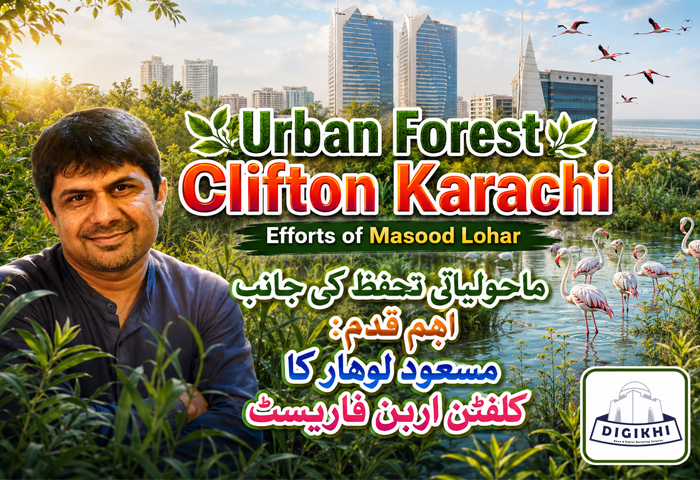
Quick Answer
Urban Forest Clifton Karachi is a 220-acre forest that Masood Lohar built on an old landfill on Clifton Beach. He launched it on January 8, 2021, in collaboration with Sindh Radiant Organization and the Sindh government. It now holds more than 700,000 trees and over 150 bird species.
Quick Facts
| Fact | Detail |
| Founder | Masood Lohar |
| Organization | Sindh Radiant Organization (SRO) |
| Location | Clifton Beach, Karachi, Pakistan |
| Land size | 220 acres (former landfill) |
| Start date | January 8, 2021 |
| Trees planted | 700,000+ across about 83 native species |
| Bird species recorded | 150+ |
| Carbon captured | About 6,000 metric tons per year |
| Mangrove growth rate | About 60 inches in 15 months (world average: 14 inches) |
Karachi once dumped trash on a quiet beach in Clifton. Today, that same spot is home to a real forest. Masood Lohar built it with his own hands. He also paid for the first trees with his own pension money. Altogether, one man changed a whole coastline by himself. DigiKhi shares this story to honor his work.
Key Takeaways
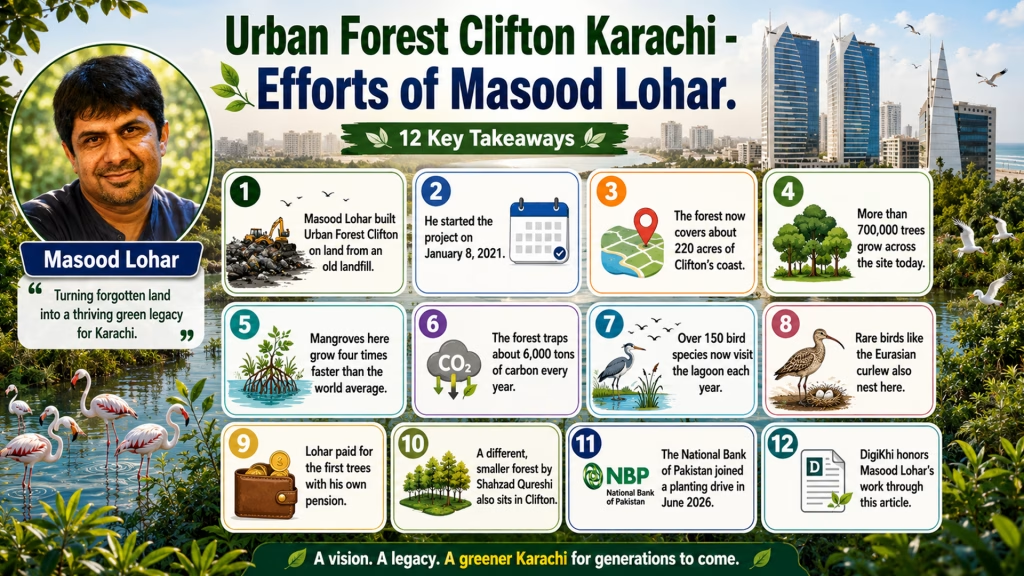
- Masood Lohar built Urban Forest Clifton on land from an old landfill.
- He started the project on January 8, 2021.
- The forest now covers about 220 acres of Clifton’s coast.
- More than 700,000 trees grow across the site today.
- Mangroves here grow four times faster than the world average.
- The forest traps about 6,000 tons of carbon every year.
- Over 150 bird species now visit the lagoon each year.
- Rare birds like the Eurasian curlew also nest here.
- Lohar paid for the first trees with his own pension.
- A different, smaller forest by Shahzad Qureshi also sits in Clifton.
- The National Bank of Pakistan joined a planting drive in June 2026.
- DigiKhi honors Masood Lohar’s work through this article.
What Is Urban Forest Clifton?
Urban Forest Clifton sits on Karachi’s coast, next to the sea. Workers built it on old dump land in Clifton. It covers about 220 acres of new green space. Additionally, it currently holds more than 700,000 trees. Masood Lohar started the project in January 2021.
The forest also has a big lagoon full of water. Flamingos and ducks visit this lagoon every year. Furthermore, the lagoon feeds a large patch of mangrove trees. Native plants like moringa and date palms also grow here. This spot once held only garbage and broken concrete.
This particular place was a dump site.
— Masood Lohar, quoted in Dawn newspaper, May 2023
The Man Behind Urban Forest Clifton Karachi
Masood Lohar worked for the United Nations for many years. He led a small grants program at the UNDP from 2006 to 2020. He studied how low-income families adapt to climate change. Because of that work, he understood Karachi’s weather problems well. He also wrote columns for the Dawn newspaper.
Why He Started Urban Forest Clifton?
Lohar watched Karachi’s air grow dirtier every year. He saw heat waves kill people in hot summers. As a result, he decided to build Urban Forest Clifton by himself. Hence, he used his own pension money to buy the first trees. Further, he also brought soil and saplings from a nursery in Hyderabad.
From Trash Pile to Green Home
Workers first cleared years of trash from the Clifton coastline. They dug deep to remove old plastic and broken bricks. At the same time, trucks brought fresh soil to the site. Lohar lived in a small tent on the land for two years. He wanted to watch every tree grow with his own eyes.
Building Karachi Clifton Urban Forest Step by Step
The team planted trees in small batches at first. Each batch had to survive Karachi’s dry heat and salty air. Eventually, the batches grew into thick, healthy forests. Hence, Karachi Clifton Urban Forest now covers land that once held only waste. Moreover, workers still plant new trees there almost every week.
Trees, Mangroves, and Growth Records
Most of the trees planted here are native Sindh species. Moringa, sukhchain, oleander, and wild almond all grow well in this soil. Generally, native trees need less water and fight off local pests better. Additionally, the team also planted hundreds of thousands of mangrove saplings. Mangroves protect the coast from storms and rising seas.
Mangroves Progress
Recent tests show that mangroves are growing faster than usual here. Global mangroves grow about 14 inches per year on average. As a matter of fact, mangroves at this site grew 60 inches in the same time. Lohar’s team calls this growth rate a world record for mangroves. The fast growth also means the trees pull more carbon from the air.
Also Read: Vermicompost Red Wigglers Organic Farming in Jhimpir Sindh
The young mangrove patch already stores real carbon each day. It captures about 41 kilograms of carbon dioxide every single day. Besides that, the entire forest traps about 6,000 tons of carbon each year. That equals the yearly exhaust from 1,300 cars. These numbers come straight from Lohar and his team. No outside group has confirmed them yet.
Wildlife Returns to the Coast
Karachi lost most of its coastal wildlife to pollution long ago. Concrete and garbage pushed birds and fish far away. However, the new forest brought much of that life back.
Today, more than 150 bird species visit the site. No one had seen some of these species in Karachi for decades.
Birds, Bees, and a New Lagoon
The lagoon inside the forest draws the biggest crowds of birds. Pink flamingos wade through the shallow water most mornings.
Particularly in winter, Siberian ducks also stop here on their long trip. Bees and butterflies now fill the bushes near the water. Even monitor lizards and harmless snakes call this place home.
Rare Birds Spotted at the Site
Bird watchers spotted a black-tailed godwit at the lagoon in 2022. Furthermore, they also found a Eurasian curlew, a bird under global watch. Evidently, both birds are listed as endangered species. Watchers even recorded the first-ever crab plover sighting at this lagoon. These findings prove the forest works as a real habitat.
Two Forests, One Name: Don’t Get Confused
Some websites mix up two different forests in Clifton. One project, owned by Masood Lohar, covers 220 acres. On the other hand, a smaller pocket forest by Shahzad Qureshi sits nearby. Qureshi started his forest back in 2015 using a Japanese planting method. His forest covers only a few acres, much less than Lohar’s site.
A third project also uses the term ‘urban forest’ in its name. The Sindh government plans to plant a large tree line along two rivers. Despite the shared name, that river project has no link to Clifton. Readers should know these are three separate efforts. This guide only covers Masood Lohar’s beach forest in Clifton.
Compare the Three Projects
| Project | Founder | Size | Started | Location |
| Clifton Urban Forest (this article) | Masood Lohar | 220 acres | January 8, 2021 | Clifton Beach Landfill |
| Urban Forest (pocket forest) | Shahzad Qureshi | ~3 acres | Dec 2015 | Clifton City Park |
| Riverbank forest plan | Sindh government | Much larger, river-length | Planned | Lyari and Malir rivers |
Big Problems Facing the Forest
Money remains a constant worry for this volunteer-run project. Lohar often pays for supplies out of his own pocket. Nevertheless, he refuses to give up on the forest’s future. A nearby construction project also threatens the mangrove patch. City planners want to build a sea wall close by.
Poachers sometimes try to trap the rare flamingos for money. Lohar has caught trespassers hunting birds inside the forest. Contrarily, most visitors treat the site with real care and respect. Moreover, city officials have not yet answered Lohar’s calls for help. The forest’s future still depends on public support and funding.
How You Can Visit Urban Forest Clifton, Karachi?
Anyone can walk through Urban Forest Clifton Karachi free of charge. Visitors should stay on the marked paths near the lagoon. Of course, guests must keep a safe, quiet distance from nesting birds. Students, researchers, and photographers often stop by on weekends. The site also welcomes school trips throughout the year.
People who want to help can send money straight to the project. The team uses these funds to buy saplings and pay staff. For this purpose, the official Clifton Urban Forest website lists a bank account. Every rupee helps plant more trees along this coast. Small gifts add up to real, lasting change over time.
Fresh News: Banks and Groups Join In
Big companies have started to notice this project’s success. The National Bank of Pakistan planted trees here in June 2026. Bank staff joined Lohar’s team for a full day of planting. Presently, several other companies are asking how to join in. He wants every company in Karachi to copy this idea. More helpers mean more trees for Karachi Clifton Urban Forest.
Lohar always thanks helpers in public, never taking credit for himself. He often says one person cannot save a whole city alone. In short, he believes teamwork will decide the future of the Urban Forest Clifton Karachi. Every new partner brings fresh money, tools, or workers. That kind of teamwork keeps the forest alive and growing.
Why Karachi Clifton Urban Forest Matters for the Future?
Karachi has very little forest cover left, under 5 percent of its land. Big cities like this need shade, clean air, and cooler streets. Consequently, projects like this one matter more than most people realize. Trees cool nearby streets and soak up floodwater during storms. They also give people a free, calm place to rest.
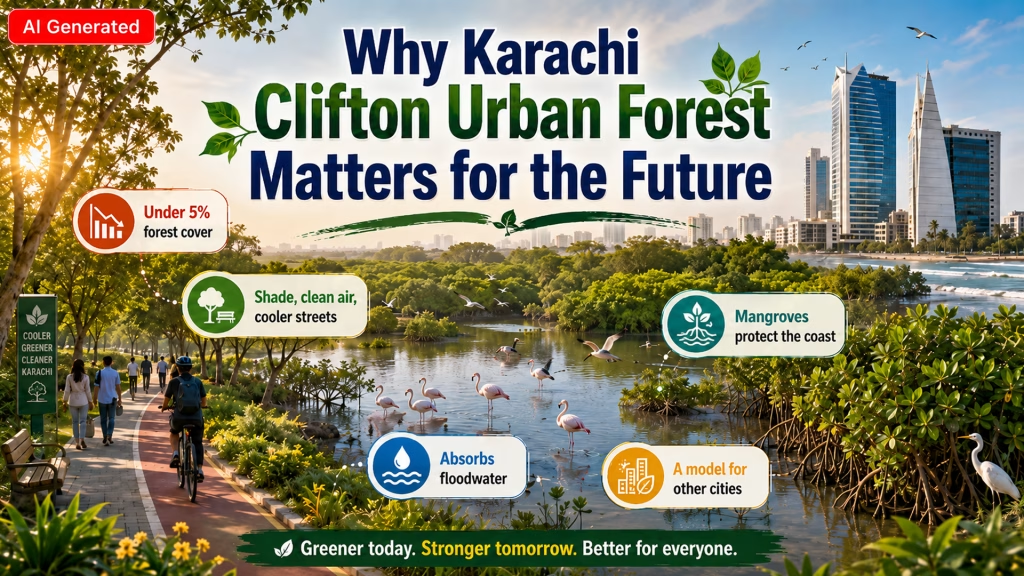
This forest also fights back against rising sea levels along the coast. Mangroves break the force of waves before they reach the city. Above all, the project shows regular people can fix big problems, too. This green space in Clifton stands as proof that one plan can work. Other cities in Pakistan now study this project as a model.
They’re tiny if you look at it from a macro perspective of the whole city, but they’re experiments.
— Yasir Husain, Climate Action Center, quoted in Arab News, November 2024
Frequently Asked Questions (FAQs)
What is Urban Forest Clifton Karachi?
It is a 220-acre forest that Masood Lohar built on an old landfill on Clifton Beach. Basicially, he started it on January 8, 2021, through Sindh Radiant Organization.
Who is Masood Lohar?
Masood Lohar is a Pakistani climate expert. Moreover, he led a UNDP small grants program from 2006 to 2020 before he built this forest himself.
How many trees grow in Karachi Clifton Urban Forest?
More than 700,000 trees grow there today, across about 83 native species, including large numbers of mangroves.
Is Urban Forest Clifton the same as Shahzad Qureshi’s Urban Forest?
No. Qureshi’s forest is a separate, much smaller pocket forest in a different Clifton park. Basicallly, he started it in 2015.
Can visitors visit Urban Forest Clifton, Karachi?
Yes. Visitors can walk the site for free, but they must stay on marked paths and avoid nesting birds.
What threats does the forest face today?
A nearby KDA marine-wall project threatens up to 300,000 mangroves. Poaching also remains an ongoing risk.
Conclusion
Masood Lohar turned a garbage dump into a living forest by himself. He gave up comfort, money, and years of his life for this dream. In conclusion, Urban Forest Clifton Karachi stands as a true gift to this city. His work deserves real thanks from every person who breathes Karachi’s air. DigiKhi salutes Masood Lohar and every volunteer who helped build this forest.
Thank you for reading Masood Lohar’s story today. For more updates and the latest news, email us at contact@digikhi.com. To sum up, visit our website for digital marketing services at https://www.digikhi.com. DigiKhi thanks you for supporting good stories like this one.
Disclaimer
This article shares publicly available information about Masood Lohar’s forest project. DigiKhi gathered these facts from news reports and public case studies. In truth, we do not speak for Masood Lohar or the Sindh government. Readers should check official sources before donating money or visiting the site. DigiKhi makes no profit from this project and holds no formal tie to it.
Sources
Shazia Hasan, “Beauties of nature find haven in Clifton urban forest,” Dawn, May 22, 2023.
Naimat Khan, “Pakistani environmentalist turns barren wasteland into urban forest in Karachi,” Arab News, November 17, 2024.
“Environmentalist turns Karachi landfill into green sanctuary for wildlife,” The Express Tribune, 2024.
“Clifton Urban Forest of Sindh Radiant Organization,” UNDP Equator Initiative, November 12, 2024.
“Clifton Urban Forest,” Wikipedia, accessed July 2026.
Official project site, cliftonurbanforest.org, accessed July 2026.