



Facial Recognition for Attendance FRAMES to Introduce in Sindh
 Digital KarachiAugust 5, 20267 Mins read
Facial Recognition for Attendance, and Sindh Teachers Biometric. Sindh teachers face the camera, not the punch clock, and DigiKhi breaks down every change.
Quick Answer: FRAMES stands for Facial Recognition Attendance Monitoring and Evaluation System. It is Sindh’s new facial recognition attendance tool for teachers. Bascially, the app scans a teacher’s face and logs arrival and departure times. Sindh launches FRAMES in six pilot districts on August 17, 2026.
The Sindh Government will start Facial Recognition for Attendance checks on August 17, 2026. Sindh Chief Minister Syed Murad Ali Shah approved the plan for six districts. Moreover, officials call the app FRAMES, short for Facial Recognition Attendance Monitoring and Evaluation System. Basically, the app scans a teacher’s face to log arrival and departure times. This guide covers how FRAMES works, what came before it, and what teachers should expect.
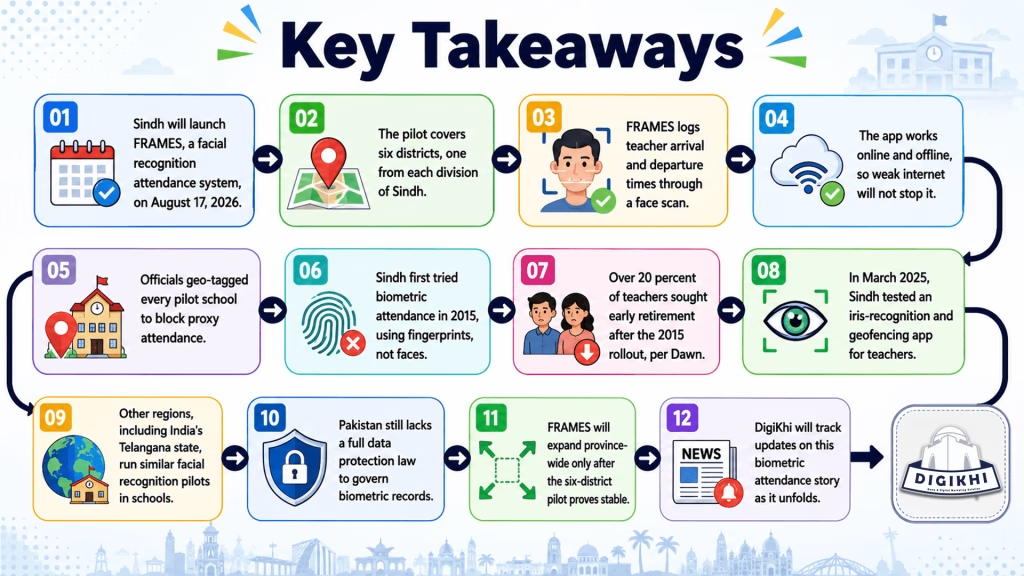
Key Takeaways
• Sindh will launch FRAMES, a facial recognition attendance system, on August 17, 2026.
• The pilot covers six districts, one from each division of Sindh.
• FRAMES logs teacher arrival and departure times through a face scan.
• The app works online and offline, so weak internet will not stop it.
• Officials geo-tagged every pilot school to block proxy attendance.
• Sindh first tried biometric attendance in 2015, using fingerprints, not faces.
• Over 20 percent of teachers sought early retirement after the 2015 rollout, per Dawn.
• In March 2025, Sindh tested an iris-recognition and geofencing app for teachers.
• Other regions, including India’s Telangana state, run similar facial recognition pilots in schools.
• Pakistan still lacks a full data protection law to govern biometric records.
• FRAMES will expand province-wide only after the six-district pilot proves stable.
• DigiKhi will track updates on this biometric attendance story as it unfolds.
What Is Facial Recognition for Attendance in Sindh?
Facial Recognition for Attendance uses a phone or tablet camera. The camera checks a teacher’s face against a stored photo. Additionally, the system logs the exact time of the match. FRAMES stores this data on a secure government server. Schools in the pilot districts already finished this setup.
Why Facial Recognition for Attendance Beats Old Methods?
Paper registers allowed teachers to sign in for absent colleagues. Fingerprint scanners fixed some of that problem after 2015. However, teachers could still ask a colleague to press a friend’s thumb in rare cases. A face scan removes that loophole almost completely. The camera confirms one specific person stood in front of it.
Sindh Teachers Biometric History Before FRAMES
Sindh Teachers Biometric tracking did not start with FRAMES this year—biometric means using a body trait, like a face or fingerprint, to confirm identity. The province first rolled out fingerprint attendance in May 2015. Furthermore, officials wanted to catch so-called ghost teachers on the payroll. These were staff who collected a salary but skipped work. The old system relied on paper and a trusted colleague.
The 2015 Fingerprint Attendance Push
Monitoring teams visited schools without warning to check thumbprints. By December 2015, over 147,000 teachers had completed the process. Consequently, the province covered more than 95 percent of its teaching staff. Education Minister Jam Mehtab Dahar told the Sindh Assembly in 2017 that results were strong. Over 20 percent of teachers applied for early retirement by 2017, Dawn reported.
More than 20% of Sindh’s government school teachers applied for early retirement after biometric attendance exposed absentee staff, Education Minister Jam Mehtab Dahar told the Sindh Assembly in 2017, according to Dawn.
A 2025 Iris and Geofencing Test Run
Sindh government tested a different tool in March 2025, before FRAMES existed. That app used iris scans instead of face or thumb data. At the same time, geofencing, a GPS boundary check, kept sign-ins on campus only. The tool also linked attendance data straight to the payroll office. Reports from that time came from The News and ID Tech Wire in March 2025.
Sindh’s path to FRAMES took more than a decade to unfold. For this purpose, the table below lines up each stage with its source. Each system replaced an older, weaker method of tracking staff.
| Year | System | Technology | Scale / Source |
| 2015 | First biometric attendance drive | Fingerprint | Over 147,000 teachers verified by Dec. 2015 (Sindh Education Department) |
| 2017 | Early results reported | Fingerprint | Over 20% of teachers sought early retirement (Dawn, Nov. 2017) |
| March 2025 | Mobile attendance + payroll pilot | Iris recognition + geofencing | Reported by The News and ID Tech Wire |
| Aug. 2026 | FRAMES pilot | Facial recognition | Six districts, one per division; launches August 17, 2026 |
Sindh Teachers Biometric Rules Under FRAMES
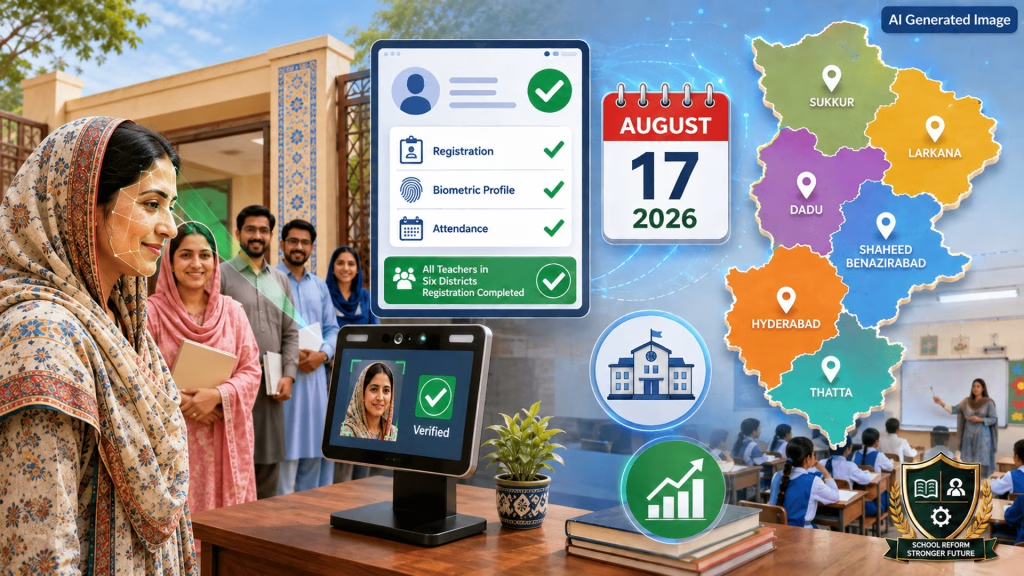
Sindh Teachers Biometric rules now center on the FRAMES rollout. The program starts in six districts on August 17, 2026. Particularly, officials picked one district from each of Sindh’s six divisions. Every teacher in those districts has already completed registration. The Chief Minister called this step a major reform for schools.
Also Read: Governor Sindh Free Techno Kid AI 2 Summer School 2026
Six Pilot Districts and the August 17 Start Date
The app will work even where internet service stays weak. Despite limited connectivity, offline data syncs once a signal returns.

Teams geo-tagged, or GPS-marked, every pilot school to stop proxy sign-ins. This blocks one teacher from signing in for another. Officials plan close monitoring during these first few weeks.
Facial Recognition in Schools Around the World
Sindh government is not alone in testing face scans for schools. China uses a similar system in a Hangzhou high school. Above all, that tool checks student focus, not just attendance. It scans faces every 30 seconds during class time. The system also tracks lunch and library visits.
Lessons From China, India, and Australia
India’s Telangana state ran a pilot in two districts first. On the other hand, the state plans to scale the tool to 26,000 schools. That would reach roughly 2.6 million students across the region. Australia already uses a tool called LoopLearn for daily roll call. That system claims to save teachers over two hours each week.
Sindh is one of several regions now testing this technology. Equally, the table below shows how each program compares in scale. None of these tools match Sindh’s offline capability yet, based on available reporting.
| Region | Program | Technology | Scale |
| China (Hangzhou) | Intelligent classroom behavior system | Facial recognition, 30-second scans | School-wide; also used for canteen and library access |
| India (Telangana) | State attendance pilot | Facial recognition | Piloted in 2 districts; planned for 26,000 schools, 2.6M students |
| Australia | LoopLearn | Facial recognition roll call | Claims up to 2.5 hours saved per teacher weekly |
| Sindh, Pakistan | FRAMES | Facial recognition, online/offline | Six pilot districts starting August 17, 2026 |
Privacy Questions Around Biometric Data in Pakistan
Face data counts as sensitive personal information under most privacy laws. Nevertheless, Pakistan still has no full data protection law in place. A draft bill has moved through consultation but not a final vote. That bill would list biometric data as sensitive personal data. It would also create a new commission to oversee the rules.
What the Law Says About Biometric Records?
The National Database and Registration Authority (NADRA) already uses face checks for other services. To illustrate, pensioners can now complete proof-of-life checks from home using their phone. NADRA also offers a facial recognition certificate as a backup ID check. These programs show facial data already flows through government systems. FRAMES adds teacher attendance to that growing list.
What Does FRAMES Mean for Teachers and Parents?
Teachers in pilot districts must now show up on time, every day. Firstly, a missed scan could flag a teacher as absent that day. Officials say a support team will help fix technical errors. Parents can expect steadier staffing at their child’s school. Officials tied the tool to better learning results for students.
Some questions about FRAMES remain open right now. Sindh Government has not published a public appeals process yet. In particular, officials have not confirmed how long the system keeps face data. Teachers with camera or lighting problems need a backup option. DigiKhi will update this article once officials share more details.
Frequently Asked Questions (FAQs)
What is FRAMES in Sindh schools?
FRAMES stands for Facial Recognition Attendance Monitoring and Evaluation System. In brief, it logs teacher attendance through a face scan on a phone. The Sindh government built it to replace older, weaker methods. It starts in six pilot districts on August 17, 2026.
How is this biometric check different from older ones?
Older systems used a fingerprint or an iris scan instead. Conversely, FRAMES only needs a short look at a camera. This method skips physical contact with a scanner pad. It also works during weak internet service in remote schools.
Will FRAMES expand beyond the first six districts?
Officials plan a wider rollout after the pilot phase ends. So far, no fixed date exists for a province-wide launch. The government wants to review results from these six districts first. Expect updates once officials confirm the next phase.
Is my biometric data safe under Pakistani law?
Pakistan has drafted rules for biometric and other sensitive data. Nonetheless, lawmakers have not passed a final data protection law yet. This gap means fewer guarantees for teachers right now. Ask your school administration about local storage and access rules.
Final Thoughts and How DigiKhi Can Help
FRAMES marks a new chapter for how Sindh tracks school staff. The province moved from paper to fingerprints to faces in one decade. In conclusion, this new tool aims to close attendance gaps that hurt student learning. The August 17 launch will test the system in real classrooms. For more updates, the latest news, and digital marketing services, email us at contact@digikhi.com. Or visit our website at https://www.digikhi.com.
How We Verified This Article?
DigiKhi built this article from public government statements and independent news reports. Generally, we cross-checked each fact against at least two sources where possible. Historical figures come from Dawn’s coverage of Sindh Assembly proceedings. Current FRAMES details come from the Sindh government’s own August 2026 briefing. We list every source below so you can check the record yourself.
What This Article Doesn’t Cover Yet?
This article does not include DigiKhi’s own survey data on FRAMES. In truth, no independent group has audited the system’s accuracy rate yet. We also could not confirm the exact camera hardware or vendor used. Sindh has not released a public data retention schedule either. We will update these gaps as official information becomes available.
Disclaimer: This article shares publicly reported information about Sindh’s FRAMES program as of August 5, 2026. Rules, dates, and figures may change after official notifications. DigiKhi is not a government body and does not represent the Sindh Education Department. Please confirm details with official Sindh government sources before you make decisions based on this article.
References
- Dawn. “CM Murad approves rollout of facial recognition attendance system for govt schools in Sindh.” August 5, 2026. https://www.dawn.com/news/2020721
- Dawn. “Biometric attendance system pushes ghost teachers to seek early retirement, PA told.” November 10, 2017. https://www.dawn.com/news/1369505
- The News International. “School teachers in Sindh to mark their attendance through mobile app.” March 20, 2025. https://www.thenews.com.pk/print/1293500-schoolteachers-in-sindh-to-mark-their-attendance-through-mobile-app
- ID Tech Wire. “Sindh to Launch Facial Recognition Attendance Across Six Districts.” August 4, 2026. https://idtechwire.com/sindh-to-launch-facial-recognition-attendance-across-six-districts/
- ID Tech Wire. “Sindh Schools Launch Biometric App to Track Teacher Attendance and Payroll.” March 20, 2025. https://idtechwire.com/sindh-schools-launch-biometric-app-to-track-teacher-attendance-and-payroll/
- Wonderful Engineering. “Chinese Schools Use Facial Recognition To Make Sure Students Are Paying Attention.” https://wonderfulengineering.com/chinese-schools-use-facial-recognition-to-make-sure-students-are-paying-attention/
- Recording Law. “Pakistan Data Privacy Laws: PECA and Personal Data Protection Bill Guide (2026).” https://www.recordinglaw.com/world-laws/world-data-privacy-laws/pakistan-data-privacy-laws/





Related Articles

Pakistan Center for Autism Karachi CARTS Opened in Korangi
Pakistan's first residential home for autistic children just opened in Korangi, Karachi....

Governor Sindh Free Techno Kid AI 2 Summer School 2026
Governor Sindh Free AI Summer School 2026: Artificial Intelligence (AI) Institute Course...

BIEK Karachi To Hold XI Mock Exam 2026 with E-Sheets
BIEK Karachi To Hold XI Mock Exam 2026 with E-Sheets: Dates, centers,...



DigiSkills PK Courses New Batch DSTP 3.0 2025 | DigiKhi
DigiSkills PK Training Program is Back. Digikills PK Courses with DigiSkills New...
